Home › Wine Notes › Famille Ruhlmann-Schutz
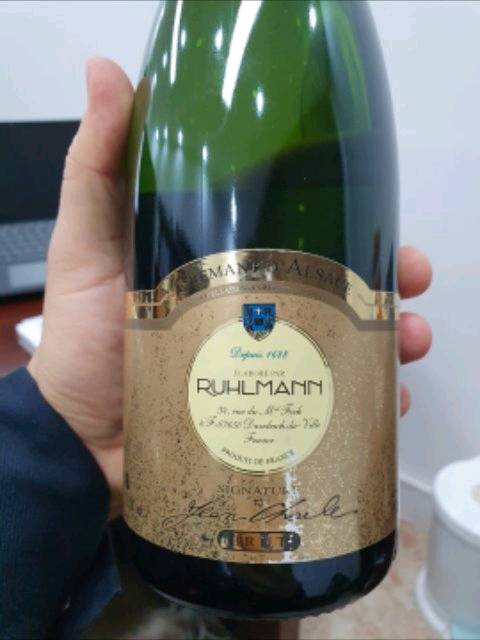
Ruhlmann Crémant d'Alsace Rosé Brut 'Harmonie de Rosé'
Sparkling roséFranceNV
By Daniel Min · Tasted 2019-11-13 · Published 2026-09-08 · Updated 2026-09-08
At a glance
Listed in the Wine Enthusiast buying guide (score not published) · No scores from the major critics — a small family domaine
Market note: A small wine with 102 Vivino ratings. Sold through retailers in New York and Chicago and across Europe. No confirmed official import into Korea.
What this wine is
Crémant is the name for French sparkling wine 'made the Champagne way, but outside Champagne.' Alsace is the largest of those regions, producing nearly half of all French crémant. The rules — second fermentation in bottle, at least nine months on the lees — are almost identical to Champagne's, and the price is a third. Crémant is what Alsatians open every Sunday at lunch.
The Ruhlmann-Schutz family has grown vines since 1688 in Dambach-la-Ville, south of Strasbourg. From that walled village on the Alsace Wine Route they make classic Alsace whites such as Riesling and Gewürztraminer alongside crémant, and they also run Château Valmont in Corbières in the south of France. As a small family domaine it has no critic scores, and it sells mainly through retailers on the US East Coast and in Europe.
Harmonie de Rosé is 100% Pinot Noir. A short skin maceration gives it the salmon color, followed by second fermentation in bottle and ageing on the lees. Dosage is 8 g/L — within the Brut limit (12 g/L or less) but near the top of it, so it feels soft on the palate. The domaine describes it as "red fruit and light citrus aromas, a fine and persistent mousse, freshness led by wild strawberry." Serve at 6–8°C; recommended as an aperitif, with dessert, and with strawberries and cream.
What the world says
With 102 Vivino ratings, this is the least-rated wine covered in this magazine. It averages 3.9, with 56% at four stars or above. The aroma keywords number barely a dozen, but the direction is clear: strawberry, raspberry, watermelon; peach; cream and yeast; brioche. Structure: acidity 3.2/5, fizziness 3.6, intensity 3.5.
"Lots of fine bubbles. Salmon pink. Strawberry, brioche and raspberry on the nose. Stewed strawberry and raspberry, light brioche. Medium acidity, very easy to drink. 4.2." — Vivino review, Oct 2020, 4 stars
"A delicious alternative to expensive Champagne. Floral notes moving into peach and watermelon. Fruit-forward, but light, smooth and with no rough edges." — Vivino review, Feb 2021, 4 stars
"A good aperitif crémant. Simple, refreshing and full of raspberry and strawberry. Perfect for 'drinking without thinking.'" — Vivino review, Aug 2019, 3.5 stars (85 likes)
That the last review drew the most agreement in the community explains this wine exactly. It is not a wine you approach expecting complexity.
How I drank it
November 13, 2019, 3 stars. "Delicious crémant."
The score and the note say different things. I wrote 'delicious' and gave it 3. Reconstructing my scoring system from three weeks into keeping records, 3 stars did not mean 'bad' but 'nothing that will stay in the memory.' It becomes clearer when compared with the 4 stars I gave Canti Prosecco the same day: Canti got 'enjoyed it casually' and 4, Ruhlmann got 'delicious' and 3. Either the Prosecco's touch of sweetness suited my palate that day better than the rosé crémant's dry red fruit, or I was already several bottles in.
A week earlier I had given my first 5 stars to Dom Pérignon 2008. With that memory still fresh, a crémant most likely read as 'something like Champagne that isn't Champagne.' Now I see it the other way round. Crémant's virtue lies precisely in not being Champagne. For around ₩20,000 (about US$15): second fermentation in bottle, 100% Pinot Noir, strawberries and brioche. In Alsace this is everyday life, and this wine puts that everyday life honestly into a bottle.
If I scored it again today: 3.5. The pity is that this label is hard to find in Korea. But several Crémant d'Alsace rosés do make it here, so the conclusion this bottle leaves behind is this: when rosé Champagne feels like too much, reach for a crémant rosé. With strawberries, and cold.
Vivino community data
NV vintage rating distribution (102 ratings, average 3.9)
| 5★ | 13 (13%) | |
| 4★ | 44 (43%) | |
| 3★ | 41 (40%) | |
| 2★ | 4 (4%) | |
| 1★ | 0 (0%) |
Most-mentioned aromas
| Family | Mentions | Top keywords |
|---|---|---|
| Red fruit | 15 | strawberry 6 · raspberry 5 · watermelon 2 |
| Stone fruit & apple | 4 | peach 2 · apple 1 · green apple 1 |
| Yeast & cream | 4 | cream 2 · yeast 2 |
| Citrus | 3 | citrus · lemon zest · orange zest |
| Bread & nuts | 1 | brioche 1 |
Structure: Acidity 3.2/5 · Fizziness 3.6/5 · Intensity 3.5/5
Average by vintage (all vintages: 102 ratings, average 3.9)
| Vintage | Average | Ratings |
|---|---|---|
| NV | 3.9 | 102 |
My original note (Vivino, 2019-11-13)
“Delicious cremant.”
Buying in Korea
Frequently asked questions
How is Crémant d'Alsace different from Champagne?
The method is the same (second fermentation in bottle, at least nine months on the lees). What differs is the region (Alsace rather than Champagne), the grapes (Pinot Blanc, Auxerrois, Riesling, Pinot Noir and so on) and the price. Alsace is France's largest crémant region, and a bottle is usually a third of the price of Champagne.
What kind of wine is Ruhlmann Harmonie de Rosé?
A Crémant d'Alsace Rosé Brut made from 100% Pinot Noir by the Ruhlmann-Schutz family, who have grown vines in Dambach-la-Ville since 1688. A short skin maceration gives it its salmon color, with a dosage of 8 g/L. A light aperitif of strawberry, raspberry, citrus and brioche, rated 3.9 on Vivino.
Price and where to buy?
€12.40 direct from the domaine, US$18–22 at US retail. There is no confirmed official import into Korea, so it is hard to find here. The Crémant d'Alsace rosés that are imported (₩30,000–40,000, about US$22–29) are the alternative.
What food does it go with?
Per Vivino: shellfish, poultry, lean fish, appetizers, or as an aperitif. The domaine recommends dessert and strawberries with cream. Serve cold at 6–8°C and drink within one to two years of release.