Home › Wine Notes › Concha y Toro
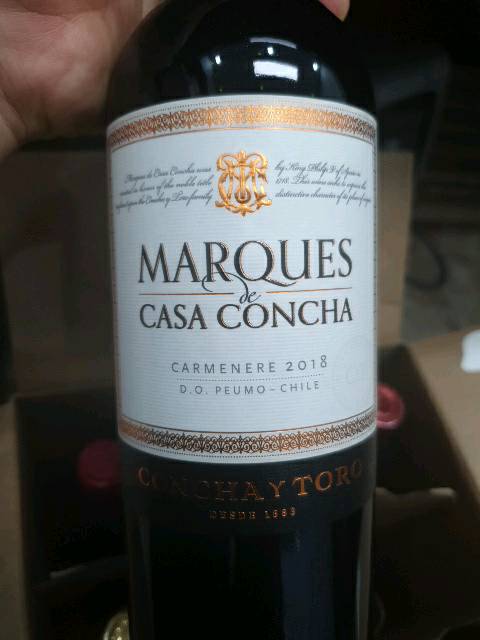
Marques de Casa Concha Carmenère 2018
RedChile2018
By Daniel Min · Tasted 2020-06-23 · Published 2026-09-30 · Updated 2026-09-30
At a glance
In one line
3.5/5 — lower than Vivino's 4.2 average · world avg price US$31 · Carmenère: a grape called Merlot for over a century that only got its own name back in 1994.
Wine-Searcher aggregate of 9 critic reviews: 91. The 2018 won a gold medal at the International Wine Challenge (IWC), whose panel noted a savoury, herbal nose, bright black fruit, and a tight yet juicy palate. Vivino lists three critic scores of 92 (publications not named).
Market note: World average US$31 / 750ml (Wine-Searcher, ex-tax, last recorded May 2025). No retailer currently lists the 2018; recent vintages mostly sit between US$16 and US$23 at US retail. On the same basis the line's Cabernet Sauvignon is US$23 (90) and the higher 'Etiqueta Negra' US$38 (91). On Vivino, the twenty-one vintages with 30+ ratings score 3.7–4.2, with the 2018 at 4.2 among the highest.

Father's note — Daniel Min
Original author of the notes“칠레 까르미네르. 역시나 바로 따서 먹어도 과실이 충분히 올라온다. 훌륭. 맛도 기대이상. 대중적인 맛에 더욱 길들여진다면 콘차이토르 마르퀴스 카사 콘차 참 맛있다. 그래도 다들 아시는 것 처럼 그 이상의 것에서 기대되는 적절한 밸런스, 깊이, 여운이 남는 피니쉬등은 기대하기 어렵다. 그래도 가끔은 이런 대중적인 와인에서도 좋은 그림이 그려지긴 한다. 다음 기회에.”
Show original
“oak vanilla blackberry black fruit blackcurrant 칠레 까르미네르.. 역시나 바로 따서 먹어도 과실이 충분히 올라온다. 훌륭~ 맛도 기대이상~ 대중적인맛에 더욱 길들여진다면 콘차이토르 마르퀴스 카사 콘차 참 맛있다. 그래도~ 다들아시는것 처럼 그이상의 것에서 기대되는 적절한 밸런스, 깊이, 여운이 남는 피니쉬등은 기대하기 어렵당 ㅜㅜ 그래도 가끔은 이런 대중적인 와인에서도 좋은 그림이 그려지긴 한다. 다음기회에~~^^”

What I learned today: a cork speaks before the glass, and finishes first.
Saturday. The seats filled the moment we opened. After eight, when the first orders had gone round once, Master Seo set a small plate in front of me. On it, one freshly pulled cork. No glass yet. Tonight, the cork first, he said.
I brought my nose to the red-stained end of the cork. Vanilla, oak, and beneath them blackberry. The cork finished speaking before any glass could. Short and dark. That short smell opened a kitchen at the end of June. I got the glass afterwards. In the glass there was more pepper and chocolate, which the cork hadn't had.
Twenty-one, a Tuesday night at the end of June. Dad came home late. It seemed to have been a night out with several bottles. Before he'd even put his bag down, he took a cork from his jacket pocket and held it under my nose. What do you smell? Vanilla, and a black berry, I said. Dad only said well smelled, stood the cork on the kitchen table and went to wash. There wasn't a drop of wine. All I got that night was the cork. I don't know the name of the bottle.
I opened the notebook to that date. There are four lines for that day. A cava, a Sauternes, a champagne, and this Chilean Carmenère. Even drunk straight after opening, the fruit comes up plenty, he wrote. Tasted better than expected. If you're used to crowd-pleasing wines, it's really delicious. Still, don't expect the balance, depth and lingering finish of something more. And still, sometimes "even a popular wine like this paints a good picture". Three and a half stars. The bottle was Marques de Casa Concha Carmenère. I stuck on the wine-name Post-it. Why he brought home this cork out of four lines isn't in the notebook. It was probably just the one that happened to go into his pocket.
Meanwhile, at the end of the counter, Minjae's hand shot up, and Master Seo's expression didn't change at all.
After closing, I wrote the name on the twenty-fifth page of the new notebook. I split the aroma column in two and wrote 'cork' on the left and 'glass' on the right. What I learned today: a cork speaks before the glass, and finishes first. And that even without wine, Dad brought me a smell.

What this wine is
The name comes from a title. In 1718 King Philip V of Spain made José Santiago Concha y Salvatierra 'Marquis of Casa Concha', and Don Melchor de Concha y Toro, who founded Concha y Toro in 1883, was the seventh marquis. The company launched a line bearing the title in 1976; the first bottle was a 1972 Cabernet Sauvignon from Puente Alto. Another face of the same house is Casillero del Diablo — 'the Devil's cellar'.
The grape in this bottle, Carmenère, has a longer story. It was originally a Bordeaux variety, but after phylloxera swept through in the 19th century it wasn't replanted, being late-ripening and prone to disease. The grape thought to be lost had already crossed to Chile in the 1800s along with the other Bordeaux varieties. In Chile it was long called Merlot — a 'special Merlot', no less.
In 1994 the French ampelographer Jean-Michel Boursiquot, visiting Chile, noticed in one 'Merlot' vineyard that the stamens under the flowers were twisted. The four Bordeaux varieties have straight stamens. That vineyard was Carmenère. Concha y Toro went on to build Peumo, in the Cachapoal Valley, into Carmenère country.

What the world says
The nine critic reviews gathered on Wine-Searcher aggregate to 91. The 2018 took a gold medal at the International Wine Challenge (IWC); the panel wrote of a savoury, herbal nose, bright black fruit, and a palate tight yet juicy, firm and fresh. Vivino lists three 92s without naming the publications.
On Vivino this vintage averages 4.2 from 4,534 ratings, and the label as a whole 4.1 from 44,835. Fours dominate, with 3,234. The twenty-one vintages with 30+ ratings score 3.7–4.2, and the 2018 is among the highest.
The aroma keywords run oak, vanilla and chocolate (1,011 mentions), plum, blackberry and black fruit (725), pepper and mint (405), earth, smoke and leather (317), and cherry and red fruit (216). Structure: intensity 4.2/5, acidity 2.9, tannin 2.8, sweetness 1.8. Reviews often mention Carmenère's signature green bell pepper.
"Loads of green bell pepper, bright red fruit, subtle pipe tobacco." — Vivino review, Aug 2022, 4.2

How I drank it
June 23, 2020, 3.5 stars. I wrote down oak, vanilla, blackberry, black fruit and blackcurrant.
Like a Chilean Carmenère should, it gave plenty of fruit even drunk straight after opening. It tasted better than expected, too. If you're used to crowd-pleasing wines, it's really delicious. But the balance, depth and lingering finish you'd expect from something more — don't ask for those. Still, sometimes even a popular wine like this paints a good picture.
I logged four bottles that day. Château Guiraud 2005 Sauternes got a 4.5; Deutz Classic Brut a 4 (a bottle I'd given 3 a little over four months earlier — this time I wrote 'really good'); and a Marqués de la Concordia cava a 3. My 3.5 is below Vivino's 4.2. I praised the generous fruit the community rates so highly, but I wanted what lies beyond it.

Where this wine shows up
A title Philip V granted to José Santiago Concha y Salvatierra; Concha y Toro's founder Don Melchor was the seventh marquis. The company launched a line under the name in 1976.
Concha y Toro — Our History · Packaging of the World — Marques de Casa Concha redesign
Artwork and stills are not reproduced for copyright reasons; scenes are summarised.
Vivino community data
2018 vintage rating distribution (4534 ratings, average 4.2)
| 5★ | 578 (13%) | |
| 4★ | 3234 (71%) | |
| 3★ | 666 (15%) | |
| 2★ | 37 (1%) | |
| 1★ | 19 (0%) |
Most-mentioned aromas
| Family | Mentions | Top keywords |
|---|---|---|
| Oak | 1011 | oak 331 · vanilla 201 · chocolate 198 · tobacco 104 · dark chocolate 52 |
| Black fruit | 725 | plum 220 · blackberry 145 · black fruit 102 · blackcurrant 51 · blueberry 48 |
| Spice | 405 | pepper 257 · mint 38 · cinnamon 30 · licorice 11 · anise 8 |
| Earth & leather | 317 | earthy 84 · smoke 75 · leather 69 · minerals 17 · cocoa 16 |
| Red fruit | 216 | cherry 95 · red fruit 56 · raspberry 33 · strawberry 16 · cranberry 4 |
Structure: Acidity 2.9/5 · Intensity 4.2/5 · Tannin 2.8/5 · Sweetness 1.8/5
Average by vintage (all vintages: 44835 ratings, average 4.1)
| Vintage | Average | Ratings |
|---|---|---|
| 2000 | 3.9 | 45 |
| 2001 | 3.7 | 37 |
| 2006 | 3.7 | 37 |
| 2007 | 4 | 388 |
| 2008 | 4 | 222 |
| 2009 | 3.9 | 1014 |
| 2010 | 3.9 | 1999 |
| 2011 | 3.9 | 2552 |
| 2012 | 4 | 3974 |
| 2013 | 4.1 | 2975 |
| 2014 | 4 | 4049 |
| 2015 | 4.1 | 5941 |
| 2016 | 4.1 | 2762 |
| 2017 | 4.1 | 4251 |
| 2018 | 4.2 | 4534 |
| 2019 | 4.2 | 2843 |
| 2020 | 4.1 | 944 |
| 2021 | 4.2 | 1679 |
| 2022 | 4.1 | 1063 |
| 2023 | 4.1 | 1141 |
| 2024 | 4 | 374 |
Other wines Father scored 3.5 →
Read next
Swipe for more →
 Same producer
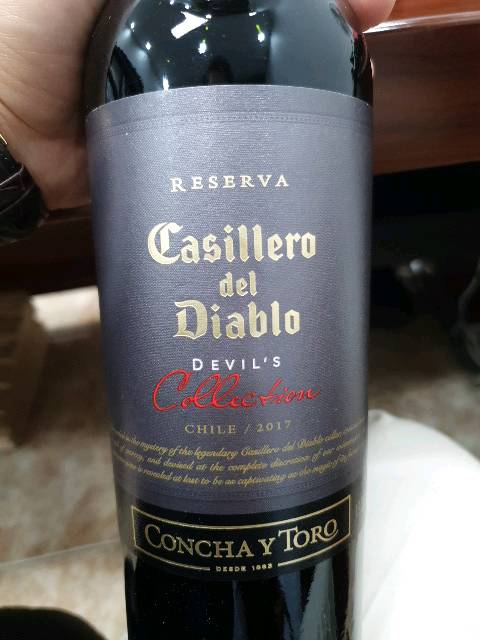
Casillero del Diablo, Devil's Collection Red (Reserva) 2017
Chile · Central Chile★★★★☆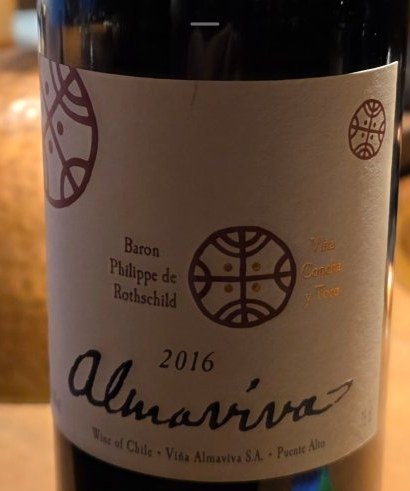 Same producer
Almaviva 2016
Chile · Central Chile★★★★½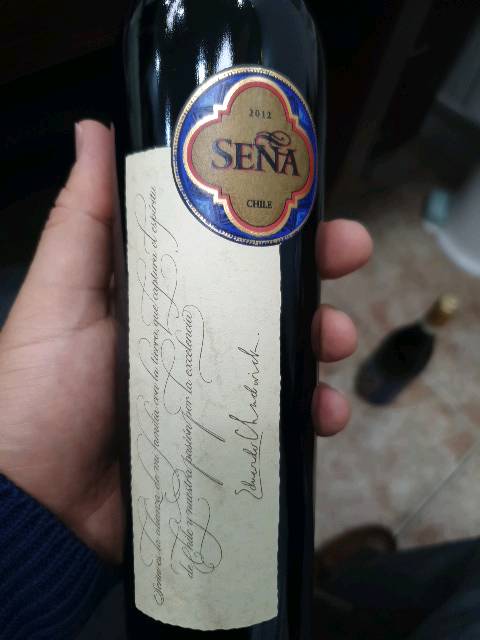 Similar style
Seña 2012
Chile★★★★½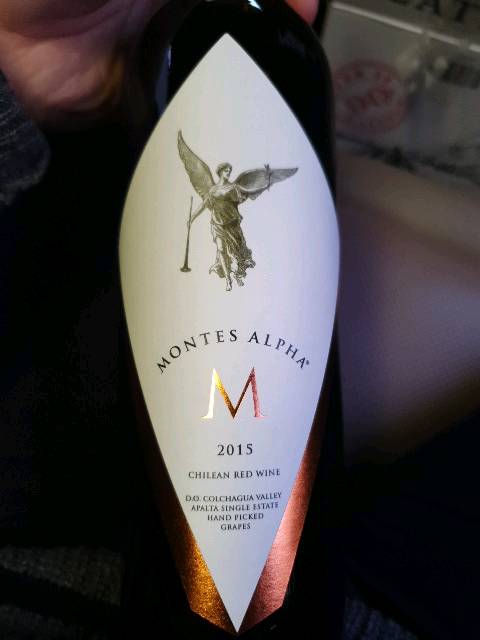 Similar style
Montes, Alpha M 2015
Chile · Central Chile★★★½☆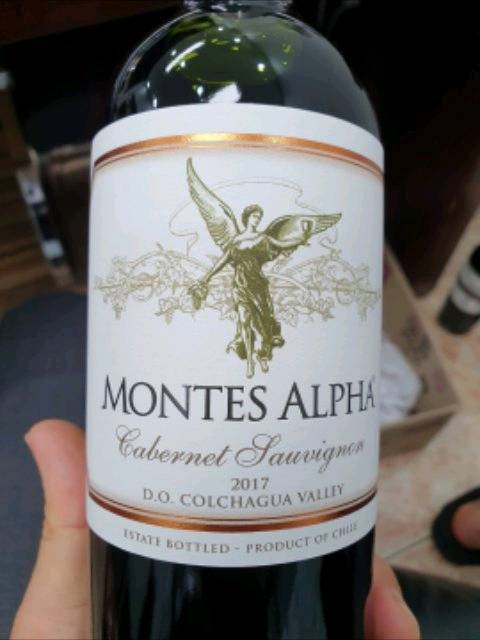 Similar style
Montes Alpha Cabernet Sauvignon 2017
Chile · Central Chile★★★½☆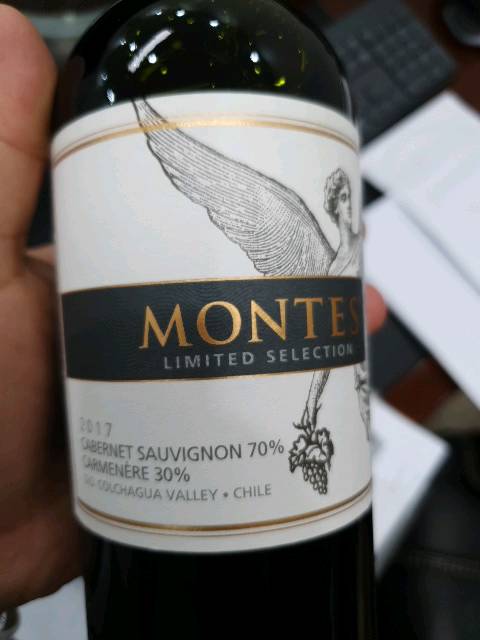 Similar style
Montes Limited Selection Cabernet Sauvignon–Carmenère 2017
Chile · Central Chile★★★½☆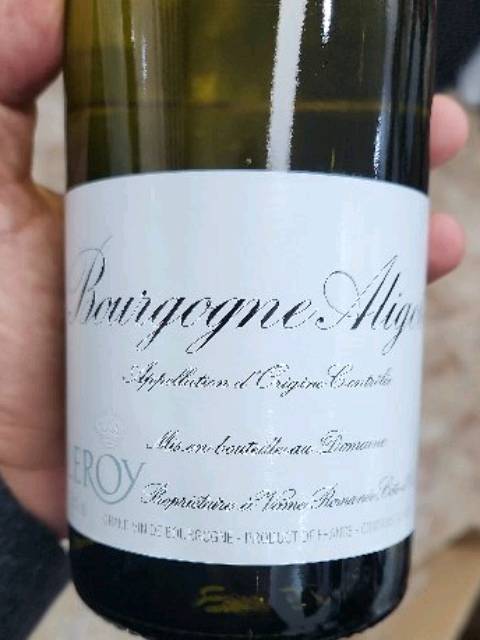 Same grape
Domaine Leroy Bourgogne Aligoté 2014
France · Burgundy★★★★☆ Same grape
Domaine de la Pinte Trousseau Arbois 2018
France★★★★½ Same grape
Far Niente Chardonnay 2019
United States · Napa★★★★☆ Same grape
Lucien Le Moine Meursault-Charmes Premier Cru 2018
France · Burgundy★★★★☆ Same grape
Maison Leroy Saint-Aubin Premier Cru Le Charmois Blanc 2002
France · Burgundy★★★★★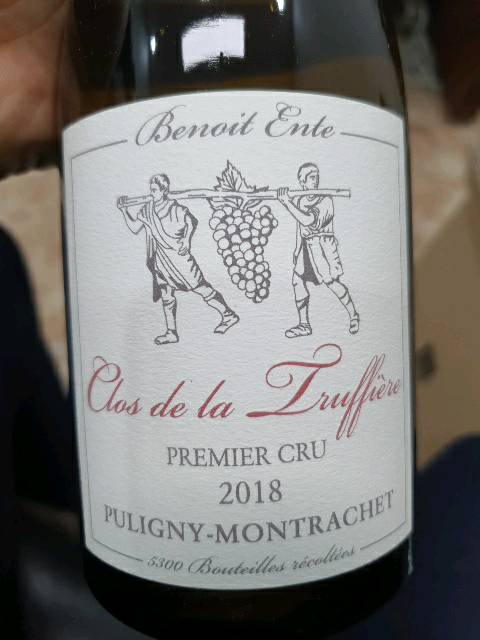 Same grape
Benoît Ente Puligny-Montrachet Premier Cru Clos de la Truffière 2018
France · Burgundy★★★½☆More from Chile
Explore
Bottles Father gave five stars
Only the wines Father scored a perfect 5
→
Wines in manga, film and history
Bottles that show up in manga, film and history
→Wines you can buy at the supermarket
Wines actually bought at the supermarket
→Frequently asked questions
What kind of wine is Marques de Casa Concha Carmenère?
A red made by Chile's Concha y Toro from Carmenère grown in Peumo, Cachapoal Valley. The 2018 scores 4.2 on Vivino (4,534 ratings), with a Wine-Searcher critic aggregate of 91 and an IWC gold medal, at 14.7% alcohol.
How much does it cost?
Wine-Searcher's world average is US$31 per 750ml (ex-tax, last recorded May 2025). No retailer currently lists the 2018; recent vintages appear overseas at US$10.31–27.99 (USA, New Zealand, UK).
What food goes with it?
The Vivino community suggests beef, lamb, poultry and pasta. With its pepper and green bell pepper notes, it suits charcoal-grilled beef and meat dishes with chilli.
Why is Carmenère called the 'lost grape'?
Because a variety that all but vanished from Bordeaux after phylloxera survived in Chile under the name Merlot. In 1994 the French ampelographer Jean-Michel Boursiquot recognised it by the shape of its stamens, and it got its own name back.
Links & sources
View on Vivino · Prices on Wine-Searcher
- Vivino — wine page and community data
- Concha y Toro — Our History
- Packaging of the World — Marques de Casa Concha redesign
- Wine Predator — Carménère: The Vine That Masqueraded as Merlot in Chile
- Wine-Searcher — 2018 Marques de Casa Concha Carmenere
Read next
Swipe for more →
Same producerCasillero del Diablo, Devil's Collection Red (Reserva) 2017
Chile · Central Chile★★★★☆Same producerAlmaviva 2016
Chile · Central Chile★★★★½Similar styleSeña 2012
Chile★★★★½Similar styleMontes, Alpha M 2015
Chile · Central Chile★★★½☆Same grapeDomaine Leroy Bourgogne Aligoté 2014
France · Burgundy★★★★☆Same grape