Six dessert wines compared — from d'Yquem to Tokaji
From Sauternes botrytis wines to a Canadian icewine and a Hungarian Tokaji, six dessert wines noted on this magazine compared by my score, Vivino average and Wine-Searcher world average — plus a plain look at what makes botrytis wine, icewine and Moscato sweet in different ways.
Botrytis, icewine, Moscato — three different ways to be sweet
Not every dessert wine gets sweet the same way. Four of the six bottles here — d'Yquem, Rieussec, Kracher and the Patricius Tokaji — are "botrytis" (noble rot) wines. Botrytis cinerea, a mold, attaches to thin-skinned grapes and draws off just their water, leaving behind juice with sharply concentrated sugar, acid and aroma. It's said to occur reliably only in specific places where humid mornings alternate with dry, sunny afternoons — Bordeaux's Sauternes, Austria's Neusiedlersee, Hungary's Tokaj.
Magnotta's Cabernet Franc Icewine, by contrast, gets its sweetness from cold, not mold. The grapes stay on the vine into winter, and once they freeze to -10 to -12°C, only a tiny amount of intensely concentrated juice is pressed from the ice crystals. And though this piece doesn't cover them in depth, a light style like Natale Verga's or Braida's Moscato d'Asti works on yet another principle entirely — no botrytis, no frost, just fermentation stopped early to leave the grape's own natural sugar behind.
Comparison table — by score
| Bottle | Type | My score | Vivino | US$ | Sweetness / acidity |
|---|---|---|---|---|---|
| Château Rieussec 2010 | Sauternes botrytis (1855 1st Growth) | 4.5 | 4.4 | US$85 | Rich, candy-like fruit; tannin kicks in an hour after opening |
| Leonard Kreusch Beerenauslese 2014 | German botrytis (BA) | 4.5 | 4.1 | Unconfirmed | Petrol and honey, eye-wateringly good acidity |
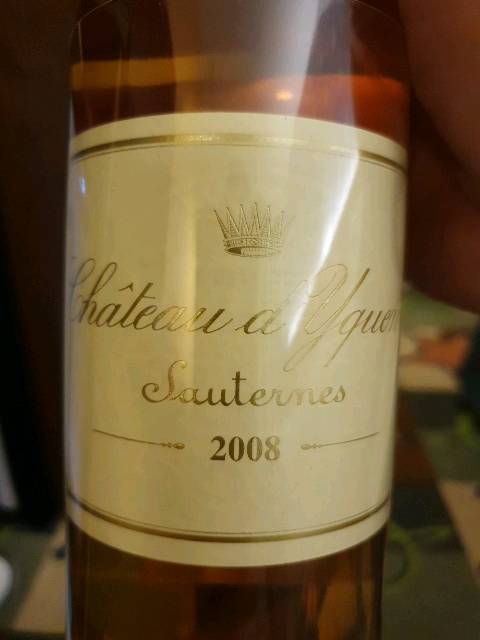
| Château d'Yquem 2008 | Sauternes botrytis (1855 Superior 1st Growth) | 4.0 | 4.7 | US$595 | Honey, cedar, apricot, well-balanced |
| Kracher Noble Reserve TBA | Austrian botrytis (TBA) | 4.0 | 4.2 | US$53 | Cedar, oak and tannin — reads closer to icewine |
| Patricius Tokaji Aszú 6 Puttonyos 2016 | Hungarian botrytis (Aszú) | 4.0 | 4.5 | US$113 | Honeyed marmalade, apricot, beeswax — quite rich |
| Magnotta Cabernet Franc Icewine 2016 | Canadian red icewine | 4.0 | 4.2 | US$34 | Strawberry-jam sweetness, straight ahead |
1. Château Rieussec 2010 — Lafite-owned, over the wall from d'Yquem
A 1855 First Growth separated from Château d'Yquem by a single wall, reportedly begun in 1790 when a monk's land was sold at auction. The Rothschild-Lafite family bought and still owns it, since 1984. My note reads: "the intense aroma and flavor really show off what Sauternes Sémillon can do," and an hour after opening: "tannin starts closing in like a Merlot, but pleasantly holds things together." The Vivino average across 24,099 raters is 4.4, slightly below my 4.5. See the note
2. Leonard Kreusch Beerenauslese 2014 — two tastings, two 4.5s
Beerenauslese (BA), a German quality classification, is made from individually hand-picked, botrytis-shriveled berries. I drank this label across two different vintages and scored both 4.5, with a "gasoline" note showing up both times — usually associated with Riesling, though this wine's grape was reportedly Huxelrebe, and at least one other reviewer made the same mix-up. My note calls it "a light, almost beverage-like, perfect dessert wine" with eye-wateringly good acidity. Wine-Searcher has no world average listed for this bottle. See the note
3. Château d'Yquem 2008 — the 1855 Superior First Growth, the peak of Sauternes
The only Sauternes estate to receive the 1855 classification's top rank, Premier Cru Supérieur — a rung above First Growth. Grapes are hand-picked in as many as six or seven passes through the vineyard to select only botrytis-affected berries, yielding a famously low crop — roughly one glass of wine per vine. My note is four words: "honey, cedar, apricot, balanced." The Vivino average across 57,720 raters is 4.7, actually above my score of 4.0 — the widest gap below the community average of any bottle here. See the note
4. Kracher Noble Reserve Trockenbeerenauslese — fog off the Neusiedlersee
The entry cuvée from the house Alois Kracher built an international reputation on, using the morning fog that rolls off Austria's Neusiedlersee in Burgenland. My note reads: "cedar, oak notes and tannin" that I don't get from other Beerenauslese wines — closer to a Sauternes botrytis wine, and since it's my first Trocken, it feels closer to icewine. The Vivino average across 1,339 raters is 4.2, close to my 4.0. See the note
5. Patricius Tokaji Aszú 6 Puttonyos 2016 — the wine of kings
Louis XIV is said, in two independent sources, to have tasted an Aszú sent by Francis II Rákóczi and called it "the wine of kings, the king of wines." Tokaj is credited with the world's first vineyard classification, drawn up in 1720, and royal decree fixed its boundaries in 1737. My note reads: "a great match with tiramisu," for a score of 4.0. The Vivino average across 1,391 raters is 4.5, above my score. See the note
6. Magnotta Cabernet Franc Icewine 2016 — Niagara, -10 to -12°C
A red icewine from Canada's Niagara Peninsula VQA region, made from Cabernet Franc grapes harvested once frozen to between -10 and -12°C. Residual sugar runs around 206 grams per liter, and my note is just four words: "strawberry jam, so sweet!" I scored it the same day as Château d'Yquem 2008, also a 4.0 — an evening spent putting an icewine and a Sauternes side by side. The Vivino average across 125 raters is 4.2. See the note
What to pair these with
Tiramisu. My own notes pair honey-and-marmalade botrytis wines like the Patricius Tokaji Aszú with coffee and mascarpone's bitterness.
Blue cheese. Salty, moldy cheeses are traditionally paired with Sauternes-style botrytis wines — particularly a bottle like Rieussec or d'Yquem, where both sugar and acid run high.
Foie gras. The Sauternes-and-foie-gras pairing is a long-standing Bordeaux classic. Both d'Yquem and Rieussec here belong to that lineage.
Fruit. Wines with strong apricot and peach notes, like the Kracher or the Beerenauslese, tend to feel continuous with actual fruit or a light tart alongside them.
Wines in this story
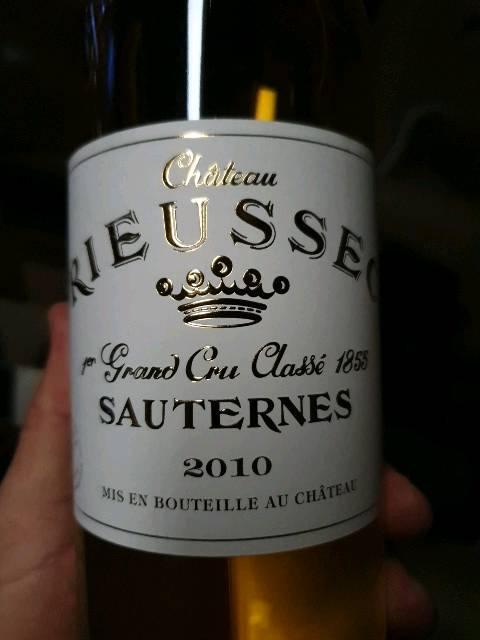
Château Rieussec, Sauternes 2010
A 1855 first growth separated from Château d'Yquem by a single wall to the west. It began in 1790 as a monk's land sold at auction, and Lafite Rothschild bought it in 1984. I gave it 4.5 — and wrote in my note that I liked it better than d'Yquem.
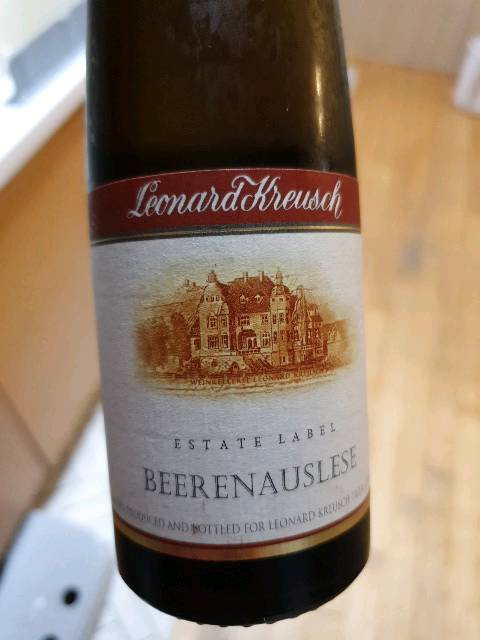
Leonard Kreusch, Beerenauslese 2014
I drank this label twice, two different vintages, and gave both 4.5 stars. "Gasoline" showed up both times — except the grape isn't Riesling, it's Huxelrebe, and one other reviewer made exactly the same mistake.
Château d'Yquem 2008
The pinnacle of Sauternes — Parker 96, Vivino 4.7. I gave the 2008 a 4, and a year later gave the 1988 vintage a 5. Same château, two vintages, two scores.
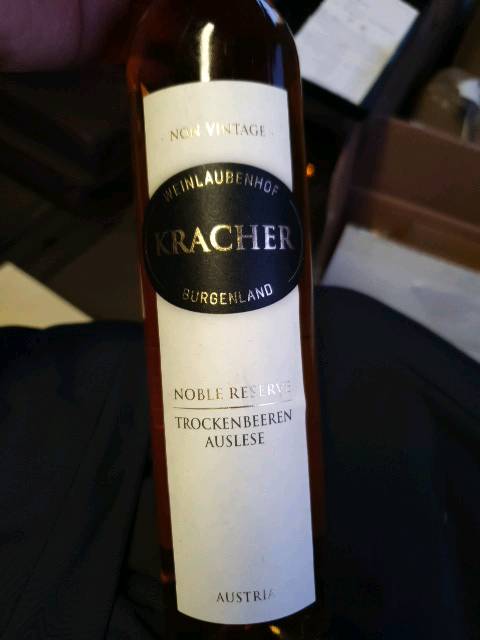
Kracher, Noble Reserve Trockenbeerenauslese (NV)
An entry-level cuvée from the house that made Alois Kracher's name internationally, built on the noble rot (botrytis) that forms in the fog off Lake Neusiedl in Austria's Burgenland. Vivino: 1,339 ratings averaging 4.2. I scored it 4 — my first Trocken after drinking only Beerenauslese before, and it felt closer to ice wine than I expected.
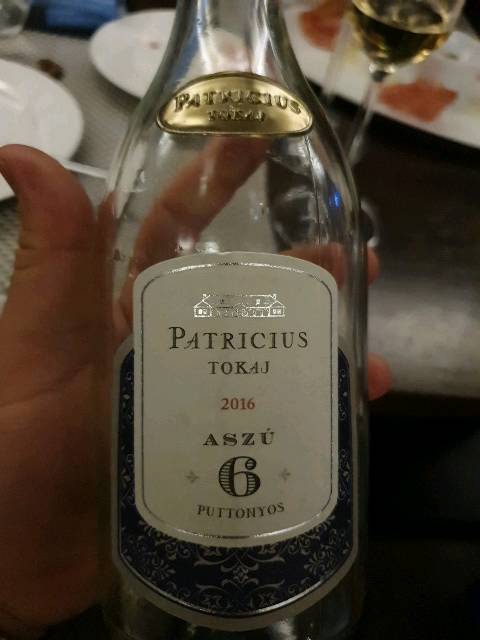
Patricius, Tokaji Aszú 6 Puttonyos 2016
Louis XIV is said to have called Tokaji "the wine of kings, the king of wines." The region had the world's first vineyard classification in 1720 and a royal charter fixing its borders in 1737. Vivino: 294 ratings averaging 4.5. My own score was 4.0 — "great match with tiramisu."
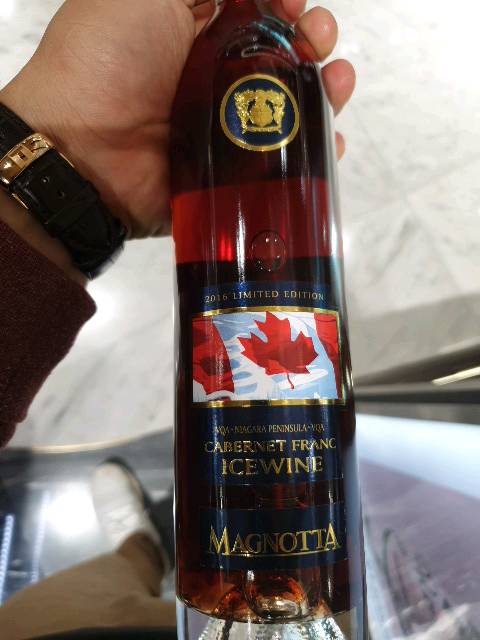
Magnotta Limited Edition Cabernet Franc Icewine 2016
A red icewine from Niagara, Canada. The same night I gave Château d'Yquem 2008 the identical score of 4 — icewine and Sauternes, side by side.
FAQ
What is a botrytis (noble rot) wine?
Botrytis cinerea, a mold, attaches to thin-skinned grapes and draws off their water, sharply concentrating the sugar and aromatics left in the juice. It occurs reliably only in specific places where humid mornings alternate with dry afternoons, such as Bordeaux's Sauternes, Austria's Burgenland and Hungary's Tokaj.
How is icewine different from a botrytis wine?
Icewine gets its sweetness from cold rather than mold. Grapes stay on the vine into winter and, once they freeze to roughly -8°C or colder, only a small amount of concentrated juice is pressed from the ice crystals and fermented. The Magnotta Cabernet Franc Icewine in this piece was reportedly harvested at -10 to -12°C.
Is Moscato made the same way as these dessert wines?
No. A light semi-sparkling style like Moscato d'Asti involves neither botrytis nor frost — fermentation is simply stopped early, leaving the grape's own natural sugar behind. It's a lighter style overall, in both alcohol and sweetness, than the botrytis and icewine bottles covered here.
How should dessert wine be stored and served?
High sugar and acid tend to let these wines hold their aroma somewhat longer after opening than other styles. General guidance is to store the bottle upright in a cool, dark place and chill it well before serving.
Sources
- Wine-Searcher — Château Rieussec 2010 pricing
- Vivino — Leonard Kreusch Beerenauslese 2014 community data
- Wine-Searcher — Château d'Yquem 2008 pricing
- Wine-Searcher — Kracher Noble Reserve TBA pricing
- Vivino — Patricius Tokaji Aszú 6 Puttonyos 2016 community data
- Wine-Searcher — Magnotta Cabernet Franc Icewine 2016 pricing