Home › Wine Notes › Tommasi Viticoltori (Pedemonte, Valpolicella)
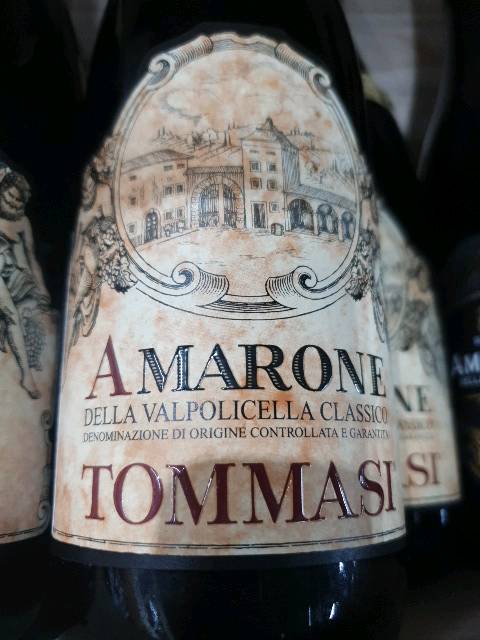
Tommasi, Amarone della Valpolicella Classico 2015
RedItaly2015
By Daniel Min · Tasted 2020-01-04 · Published 2026-09-16 · Updated 2026-09-16
At a glance
Two Vivino-listed scores — 92 (Nov 2019, also shown as James Suckling on wine.com's product page) and 95 (Dec 2019, publication not named).
Market note: Roughly Corvina 50%, Rondinella 30%, Oseleta 15%, Molinara 5% (the producer's general house ratio, adjusted by vintage), made by drying the grapes in the shade for three to four months to concentrate sugar and aroma before fermentation — the appassimento method. On wine.com it has listed at $83 regular / $51.99 sale (2015 vintage, currently sold out).
What this wine is
In 1902, Giacomo Battista Tommasi married Augusta and began working the family's land on the hills of Valpolicella. What he left behind wasn't just a vineyard, but a shift in thinking — the idea that wine should be sold not as something to quench thirst but as "a quality product to promote as lively and delectable for celebrations and get-togethers." His sons carried the vineyard through two world wars while serving their Pedemonte community, and after the war, four brothers — Sergio, Franco, Ezio and Dario — modernized the business, expanding into Valpolicella Classica and beyond into Lugana, Bardolino, Custoza and Soave.
The turning point was 1959, the year Tommasi bottled its first vintage of Amarone della Valpolicella Classico. That single bottle opened export markets in more than 85 countries and turned the Tommasi family into one of the international faces of Italian wine.
Amarone as a wine has its own famous origin legend. In the 1930s, so the story goes, at a Valpolicella winery (often said to be Bertani), a cellar master named Adelino Lucchese forgot a barrel of sweet Recioto wine, and when fermentation finally finished converting all its sugar, he tasted the now-dry result and exclaimed, "This isn't an Amaro (bitter), this is an AMARONE (a real bitter one)!" — supposedly naming the wine on the spot. That "accidental discovery" story was recently challenged by researcher Marina Valenti, who dug through the archives of the Serego Alighieri and Rizzardi families and found 1936 inventory records already listing Amarone from the 1933, 1934 and 1935 vintages, plus export records from 1938 — evidence, she argues, that Amarone was a deliberate project to build a typical, larger-production wine, not an accident. Neither version is fully settled, but the argument itself says something about what kind of wine Amarone is.
What the world says
This 2015 vintage has been rated by 19,112 people on Vivino, averaging 4.3 — matching the 4.3 average across all 96,173 ratings for the wine. Two critic scores are on file: 92 (Nov 2019, confirmed as James Suckling on wine.com) and 95 (Dec 2019, publication not named).
The flavor keywords lead decisively with oak, chocolate and tobacco (3,978 mentions), followed by plum and blackberry (2,457) and cherry and raspberry (1,905). Structure: intensity at 4.7/5 is among the highest of any red this magazine has covered, while acidity (2.3) and tannin (2.2) both run gentle — powerful but not rough. Sweetness at 3.2 also stands out, a direct reflection of appassimento's concentrated sugars.
"So hard to go wrong with Amarone and this one's a beauty, albeit a bit young still. Lovely ruby color with a huge nose of stewed fruit, earth and dark chocolate. Dry. Full bodied. Smooth tannins and good acidity." — Vivino review, Oct 2021, 4.5 stars
"Strong wine and dark red on glass smelling like oak, chocolate, cherry, raisin, plum, tobacco and leather. Pairing with Italian pizza." — Vivino review, Apr 2022, 4.5 stars
The recommended drinking window is 2018–2030; I drank it in January 2020, two years into that window.
How I drank it
4 January 2020, 4.5 stars. "Deep dark purple. Black currant, blackberries, cherry, raspberries, raisin, dried prune, oak, chocolate. My first Amarone. Full body and sweet. When a full body is this intense and sweet, it feels like eating thick berry jam. Goes down smooth. The tannin is nicely balanced too — I feel like I'll come back to Tommasi Amarone whenever I'm craving berries. Curious about other Amarones now." Written on my first-ever encounter with Amarone, the "thick jam" comparison lines up exactly with Vivino's structure data — intensity 4.7, sweetness 3.2.
That same day I opened four bottles total: Delamotte Brut (4.5), Tenuta Regaleali Bianco 2016 (3.0), and a re-tasting of Natale Verga Moscato d'Asti (4.5). This Amarone tied Delamotte for the top score of the night at 4.5 — the evening's high point, arriving after a sparkling wine and an Italian white had set the stage for this dense red.
The closing line, "Curious about other Amarones now," is itself a small record — this Tommasi was the starting point of my whole Amarone journey, and my 4.5, a full 0.2 above the community average of 4.3, probably owes something to how good a first impression it made as that entry point.
Where this wine shows up
A widely told legend has cellar master Adelino Lucchese naming "Amarone" after tasting a forgotten barrel of Recioto that fermented fully dry. Researcher Marina Valenti disputes this, citing 1936 inventory records that already list Amarone from 1933–1935 as evidence it was a deliberate production project, not an accident. Tommasi's own first Amarone vintage came later, in 1959.
WineNews — Amarone della Valpolicella, not from a "lucky" mistake but from a project on typicity · Vogadori Vini — Amarone wine was born by mistake in the Recioto fermentation
Artwork and stills are not reproduced for copyright reasons; scenes are summarised.
Vivino community data
2015 vintage rating distribution (19112 ratings, average 4.3)
| 5★ | 4430 (23%) | |
| 4★ | 12711 (67%) | |
| 3★ | 1682 (9%) | |
| 2★ | 151 (1%) | |
| 1★ | 138 (1%) |
Most-mentioned aromas
| Family | Mentions | Top keywords |
|---|---|---|
| Oak | 3978 | oak 1277 · chocolate 957 · tobacco 600 · vanilla 463 · dark chocolate 143 |
| Black fruit | 2457 | plum 1054 · blackberry 420 · dark fruit 281 · black cherry 176 · black fruit 156 |
| Red fruit | 1905 | cherry 1184 · red fruit 228 · raspberry 152 · strawberry 146 · red cherry 71 |
| Earth | 1472 | leather 630 · earthy 267 · smoke 223 · mushroom 52 · cocoa 46 |
| Dried fruit | 1445 | raisin 861 · prune 233 · dried fruit 163 · fig 149 · dried cranberry 18 |
| Spice | 690 | pepper 255 · licorice 157 · cinnamon 94 · mint 34 · savory 34 |
| Yeast & cream | 233 | cheese 149 · cream 55 · banana 14 · campfire 5 · oil 5 |
Structure: Acidity 2.3/5 · Intensity 4.7/5 · Tannin 2.2/5 · Sweetness 3.2/5
Average by vintage (all vintages: 96173 ratings, average 4.3)
| Vintage | Average | Ratings |
|---|---|---|
| 2022 | 4.2 | 93 |
| 2021 | 4.2 | 547 |
| 2020 | 4.2 | 968 |
| 2019 | 4.2 | 1825 |
| 2018 | 4.3 | 5272 |
| 2017 | 4.3 | 5587 |
| 2016 | 4.3 | 6579 |
| 2015 | 4.3 | 19112 |
| 2014 | 4.2 | 176 |
| 2013 | 4.3 | 14579 |
| 2012 | 4.3 | 12557 |
| 2011 | 4.3 | 5538 |
| 2010 | 4.4 | 6613 |
| 2009 | 4.3 | 2515 |
| 2008 | 4.3 | 2516 |
| 2007 | 4.4 | 1240 |
| 2006 | 4.4 | 745 |
| 2005 | 4.3 | 958 |
| 2004 | 4.3 | 482 |
| 2003 | 4.3 | 400 |
My original note (Vivino, 2020-01-04)
“Deep dark purple. Black currant, blackberries, cherry, raspberries, raisin, dried prune, oak, chocolate. My first amarone. Full body and sweet. 풀바디가 이렇게 진하고 스윗하면 베리류의 진한잼을 먹는 느낌이 온다. 목넘김은 부드럽게 좋다. 적당한 탄닌도 좋고 베리생각날때 토마시 아마로네 찾을 것 같다. 다른 아마로네가 궁금하다.”
Frequently asked questions
What kind of wine is Tommasi Amarone della Valpolicella Classico 2015?
A red wine from Valpolicella Classico in the Veneto, made from Corvina, Corvinone, Rondinella and Oseleta grapes dried through the appassimento method, at 15% ABV. Vivino: 19,112 ratings averaging 4.3; James Suckling scored it 92, with a second listed critic score of 95.
How much does it cost?
World average price: US$59 per 750ml ex-tax (Wine-Searcher, Sept 2026) (Wine-Searcher check pending). For reference, wine.com has listed it at $83 regular, $51.99 on sale (2015 vintage, currently sold out).
What food pairs well with it?
Vivino users suggest beef, lamb, game and blue cheese. With intensity at 4.7/5, it suits rich stews and aged cheeses well.
Is the story of Amarone's name really an "accident"?
Not confirmed either way. The widely told legend has a 1930s cellar master forgetting a barrel of sweet Recioto that fully fermented into dryness, prompting him to call it "Amarone" (a real bitter one). Researcher Marina Valenti has pushed back on this, citing pre-1936 inventory and export records as evidence Amarone was a deliberate production project rather than an accident. Neither account is fully verified.
Links & sources
View on Vivino · Prices on Wine-Searcher
- Vivino — wine page and community data
- Tommasi Viticoltori official — History
- WineNews — Amarone della Valpolicella, not from a "lucky" mistake but from a project on typicity
- Vogadori Vini — Amarone wine was born by mistake in the Recioto fermentation
- Wine.com — Tommasi Amarone della Valpolicella Classico 2015