Home › When the Cork Comes Out › Bottle 1
Bottle 1 — A Little Every Day, Clearly
ShortsPublished 2026-09-26 · 62 sec
The bottle
The story in this episode
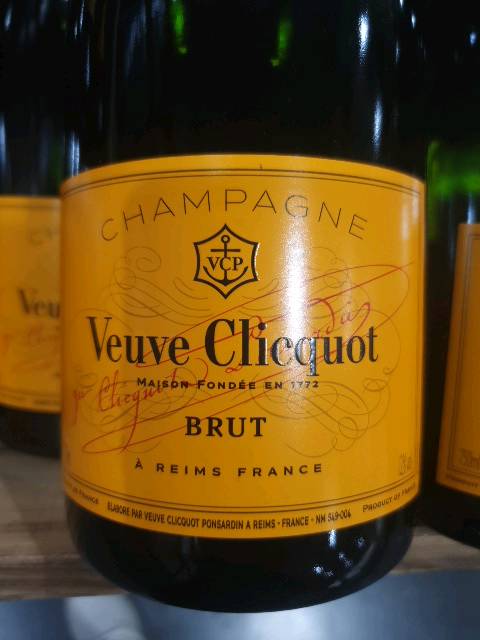
The first bottle opened at Bar Suda is Veuve Clicquot Yellow Label, the Champagne a 27-year-old widow put her name on. Veuve is French for 'widow'. When François Clicquot died suddenly at thirty in 1805, Barbe-Nicole Ponsardin, under pressure to wind up the company, put her own name on it instead, and in 1814 she got 10,550 bottles into Russia ahead of every competitor and won over the court at St Petersburg. In 1816 she devised the riddling table: bottles set at an angle and turned a little each day so the sediment collects in the neck. That is how cloudy Champagne became clear. The yellow label followed in 1876 to mark dry Champagne for the British market, and in 1877 the colour itself was trademarked.
Dialogue
 Haru
Three months after Dad passed, Mum's bakery is opening its doors again. The bottle I picked to celebrate: Veuve Clicquot Yellow Label.
- Haru
Veuve… that means 'widow', right?
 Master Seo
Right. It's the name of a 27-year-old widow.
- Master Seo
Reims, 1805. Everyone pushed her to close the company, and instead she put her own name on it.
- Barbe-Nicole
I will not sell. From now on, this house is 'Veuve Clicquot Ponsardin'.
- Haru
The 'widow' everyone called her… she turned it into the sign over the door?
- Master Seo
In 1816 she set the bottles at an angle and turned them a little every day, until cloudy Champagne ran clear. Every house still does it.
- Haru
Turned a little every day until it runs clear… that's exactly what Mum's three months were like. For Mum, this one.
Terms
- Veuve
- French for 'widow': after her husband François died in 1805, 27-year-old Barbe-Nicole Ponsardin put her own name on the company, and it became Veuve Clicquot.
- Riddling
- Setting bottles at an angle and turning them a little each day so the sediment collects in the neck; Madame Clicquot devised the riddling table in 1816, and cloudy Champagne became clear.
- Yellow Label
- The yellow label appeared in 1876 to mark dry Champagne for the British market, and in 1877 the colour itself was registered as a trademark.