Home › Wine Stories
The Broken Cork — Opening Mouton Rothschild 1987 After 34 Years
On 5 December 2021 the capsule came off covered in mould, and the cork snapped on the way out. What reached the glass had no business looking that young.
On 5 December 2021 I opened Château Mouton Rothschild 1987 and scored it 5.0. The bottle was 34 years past harvest and 11 years past the end of the drinking window Vivino lists for it (1992–2010). Under the capsule was a thick bloom of mould; the cork turned in the neck as the worm went in, and it broke at the last moment. Mould under a capsule is ordinary in a cellar held at 50–80% humidity and says little about the wine, as Wine Enthusiast explains; the signals that actually matter are low fill level and seepage past the cork. 1987 was a Bordeaux year of hot, dry August and September wrecked by torrential rain at the October harvest — The Wine Cellar Insider rates the vintage 82 and The Wine Independent gives the Médoc 83, while Mouton 1987 itself sits at 88 points from Robert Parker and 89 from Wine Spectator. The Vivino community average is 4.5 from 1,206 ratings. I gave the bottle 5.0, and on 15 May 2026 I opened another 1987 and gave it 5.0 again. The 1987 label is a portrait of Baron Philippe de Rothschild by the Swiss painter Hans Erni (1909–2015); the Baron died the following January.
Mould, and a Cork That Turned
My note opens like this.
"Peeled back the foil and got worried. There was an enormous amount of mould. As I opened it I could feel the cork turning.\n> Ah... the feeling that it had oxidised. The feeling that I was about to drink vinegar." — my note, 5 Dec 2021, 5.0
Half of that worry, I now know, was unnecessary. Mould under a capsule is a common sight on a bottle that has been stored properly for decades. Keeping a cork from drying out means holding cellar humidity somewhere around 50–80%, and that same humidity suits mould spores. Wine Enthusiast puts it plainly: unless the cork itself has been compromised and pushed out of the neck, the wine will be exactly as the winemaker intended. Mould is a problem on the outside of the glass, not inside it.
The signals worth reading are elsewhere. One is ullage — how far the wine has fallen down the shoulder. On the scale auction houses use for old Bordeaux, top shoulder counts as excellent for a bottle over 30 years old. The other is seepage: wine that has escaped past the cork and stained the neck or the label. That is evidence the seal actually failed, which makes it a different animal from mould. My note mentions neither fill level nor leakage. The thing I worried about was the mould, and the mould turned out to be the wrong thing to worry about.
Why a 34-Year-Old Cork Breaks
Feeling the cork turn means the worm had already lost its grip. A cork seals by pushing back against the neck with the air trapped in its cell walls; over time that springiness fades and the structure goes friable. Wine Spectator notes that some Bordeaux producers recommend replacing corks roughly every 30 years. Bottled in 1987 and opened in 2021, this one was 34 years old — past that interval.
Decanter puts dryness at the centre of it. As sommelier Alexandre Freguin explains, a bottle left standing upright too long in dry conditions dries the cork out until it "can become brittle and lose its cohesion". Jancis Robinson calls crumbling corks in old bottles a "real and common problem" that grows more frequent with age regardless of storage. It fails in three ways: the top half collapses, the bottom drops into the wine, or the middle turns to powder the moment the screw goes in.
This is where the tool matters. The first option is an Ah-So — the two-pronged butler's thief — which never touches the cork with a screw at all, sliding two thin blades down between cork and glass and twisting it free. Alongside the two-prong method, Jancis Robinson names the Durand, which combines two prongs with a conventional worm, as the answer for fragile corks; Decanter mentions it in the same breath. With an ordinary corkscrew, the worm should be long and narrow, driven deep but never all the way through.
What I Did After It Broke
The regret in my note is aimed at exactly that.
"I raised the opener carefully but at the very end the cork broke... I regretted terribly not having gone in deeper. But I put the opener back in carefully and got it out whole.\n> Moved it carefully to the decanter, then carefully again into the glass.. only clear liquid was left in the glass." — my note, 5 Dec 2021, 5.0
Going back into a broken cork is close to textbook. Jancis Robinson suggests driving a long, narrow worm into a half-crumbled cork at an angle, so it bites the thicker side of what remains. If that fails, she advises easing the fragments down into the bottle with something like the back of a wooden spoon and decanting through a funnel lined with fine mesh, a coffee filter or muslin. Decanter says the same: strain the debris through a thin cloth over a funnel and pour slowly.
I never had to push the pieces in — the second attempt brought the cork out whole. Then the decanter, then the glass. The word that repeats three times in the note is "carefully". With a 34-year-old bottle, that is most of what the job consists of. The result gets a single line: only clear liquid was left in the glass.
A 5.0 in a Weak Year, Then Another
1987 is a badly regarded Bordeaux vintage. August and September were hot and dry, but torrential rain arrived just before the October harvest and diluted ripe fruit. The Wine Cellar Insider scores the vintage 82 and concludes there is "no reason to hold or buy them"; The Wine Independent gives the Médoc 83. Mouton was treated as the exception within it. Parker called it "a sure bet for the wine of the vintage" — and still scored it 88; Wine Spectator gives 89. The Vivino community average is 4.5 from 1,206 ratings, with a drinking window listed as 1992–2010.
I scored a bottle 5.0 eleven years after that window closed. The reason is in the note.
"I expected garnet on the inner rim but the colour was far too healthy.\n> The deep tertiary notes weren't the fallen leaves and mushroom of the usual old vintage, but smooth and fresh, like walking through a crisp forest." — my note, 5 Dec 2021, 5.0
A vintage score is a summary of the rain that fell on the vineyard that year. It contains nothing about how one particular bottle spent the following 34 years.
The 1987 label is a portrait of Baron Philippe de Rothschild by the Swiss painter Hans Erni (1909–2015, born in Lucerne); the château's own account calls it a final tribute to the Baron. He had taken charge of Mouton in 1922 at the age of twenty and died on 20 January 1988, aged 85, which made 1987 the last vintage he saw. And on 15 May 2026 I opened another 1987 and gave it 5.0 again. I left no note that day.
Wines in this story
Guide (not yet tasted) · Vivino 4.7
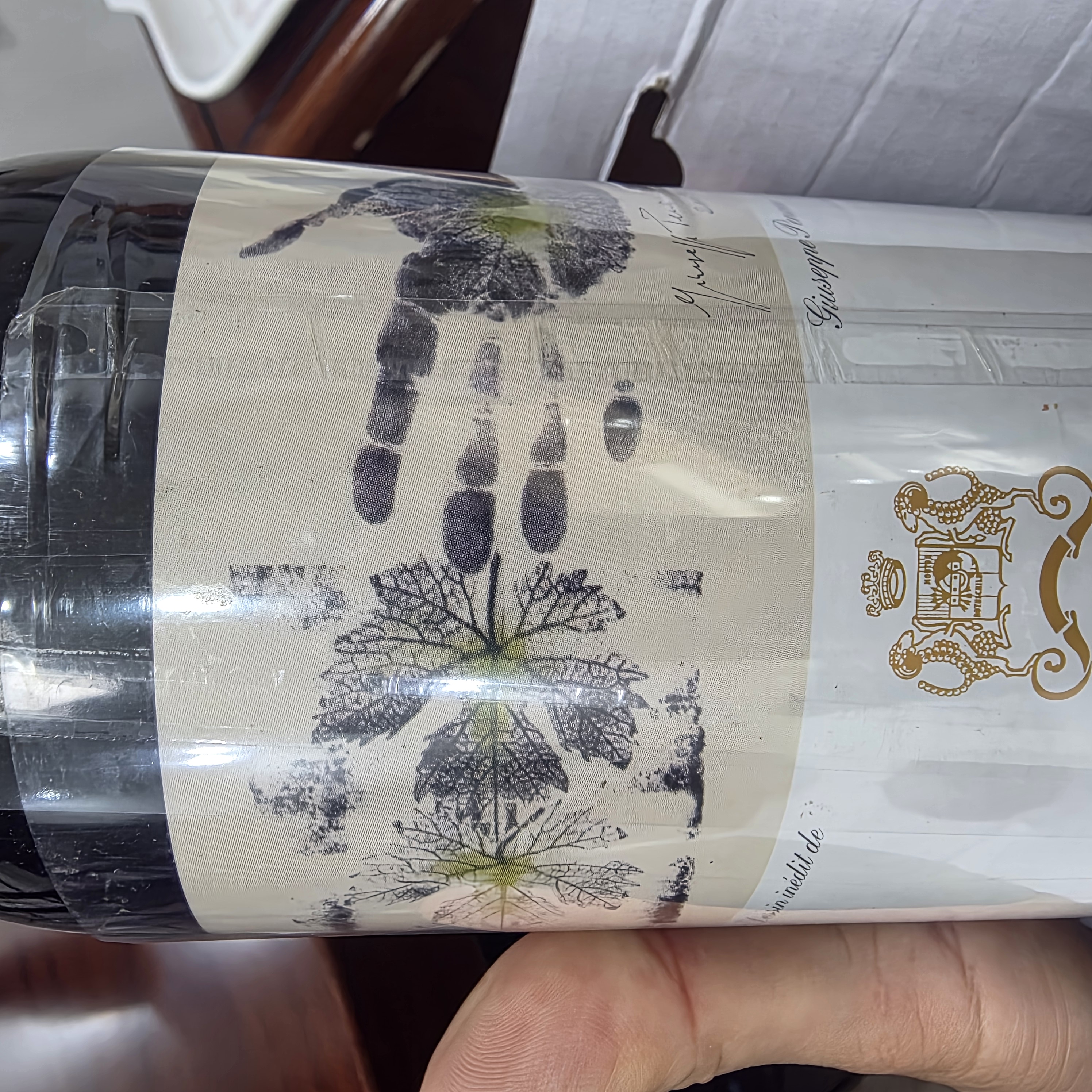
In 2005 Mouton kept only 64% of its crop and raised it for 20 months in new oak. Parker 97, Wine Spectator 98, Decanter 99, Jeb Dunnuck 100, Vivino 4.7 from 3,272 ratings. The label is by Giuseppe Penone of Arte Povera. I have not opened this bottle — so I write it with the scores I have given Mouton's other vintages instead.
RedFranceCabernet Sauvignon 85% · Merlot 14% · Cabernet Franc 1%
FAQ
Does mould under the capsule mean the wine has gone bad?
Usually not. Keeping a cork from drying out requires cellar humidity of roughly 50–80%, and mould comes with it; Wine Enthusiast notes that unless the cork has been compromised and pushed out of the neck, the wine will be as the winemaker intended. The real warning signs are a low fill level and seepage past the cork.
What opener should I use on a bottle over 30 years old?
An Ah-So — the two-pronged butler's thief, which never pierces the cork — or a Durand, which combines two prongs with a worm. Both Jancis Robinson and Decanter point to these for fragile old corks. With a conventional corkscrew, use a long, narrow worm and drive it deep without going all the way through.
What do you do when the cork breaks?
First, go back in at an angle with a long, narrow worm and try to extract what is left. If that fails, ease the fragments down into the bottle very slowly and decant through a funnel lined with fine mesh, a coffee filter or muslin. Cork debris will not spoil the wine, but it ruins the texture.
How good a vintage was 1987 in Bordeaux?
Weak. August and September were hot and dry, but torrential rain at the start of the October harvest diluted the fruit. The Wine Cellar Insider rates it 82 and The Wine Independent gives the Médoc 83. Mouton 1987 is considered the pick of the year, yet it scores 88 from Parker and 89 from Wine Spectator, with a Vivino average of 4.5 from 1,206 ratings.
Sources